Generic selectors
Exact matches only
Search in title
Search in content
Post Type Selectors

Category: One Health News

UGA Primed for One Health Research & Impact
BTSI One Health is a core collaborator in UGA’s Precision One Health initiative that conducts research at the intersection of three areas: human, animal, and environmental health. BTSI focuses on two outcomes: (1) what knowledge gained through the study of one of these three areas might inform work in the other areas; and (2) what knowledge might come from a more holistic study that involves two or three of the areas at once.

A good example is zoonotic disease, where the ultimate goal is to develop public health management policies—such as vaccination programs—that protect us from dominant strain(s) of viruses capable of spreading between animals and humans.

Detail of RN Ginn Holder giving a COVID-19 vaccine to faculty member Michael Heald at the University Health Center.
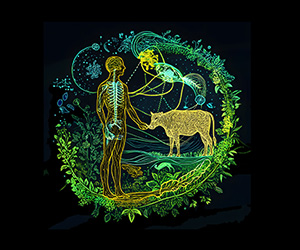
Graphic showing interrelationship between human, animal and environmental health

The work of One Health informs Precision One Health when the findings are used to guide treatment. A good example is cancer research, where dogs and humans can share clinically analogous forms of the same disease, such as B cell lymphoma, gastric or bladder cancer. Next-generation sequencing techniques can identify genetic and molecular signatures of tumors, whether the patient is a dog or a human, guiding the selection of the most appropriate chemotherapeutic drug.

UGA is especially suited to One Health research as it is one of just 13 universities in the United States with programs studying animal health, environmental health, and human health, a capability soon to be enhanced by the new School of Medicine. The close partnership with Precision Medicine under the umbrella of Precision One Health facilitates the translation of findings into clinical applications.

If you have an idea for a One Health project or are interested in collaborating on a One Health initiative, contact Jon P. Mochel at jpmochel@uga.edu.
Moving Past ‘Wait and See’ on Avian Influenza

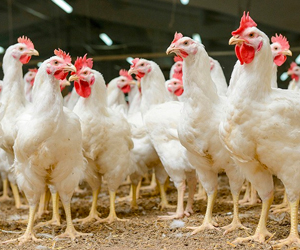
In 2025, avian influenza has infected 168 million chickens, raising egg prices dramatically. Also infected are approximately 13,000 wild birds, 996 dairy herds, and 64 humans.

Scientists watch this virus carefully to understand its transmission pathways—and for signs that humans might be in one of those pathways. While we learn a lot by watching what the virus does next, a team of UGA One Health researchers is taking a more proactive approach to anticipating its spread.

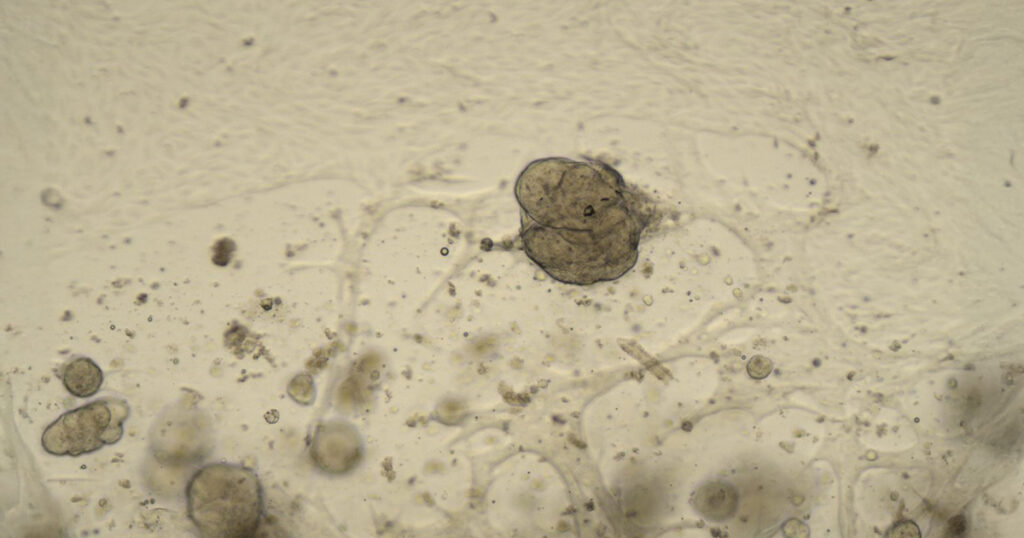
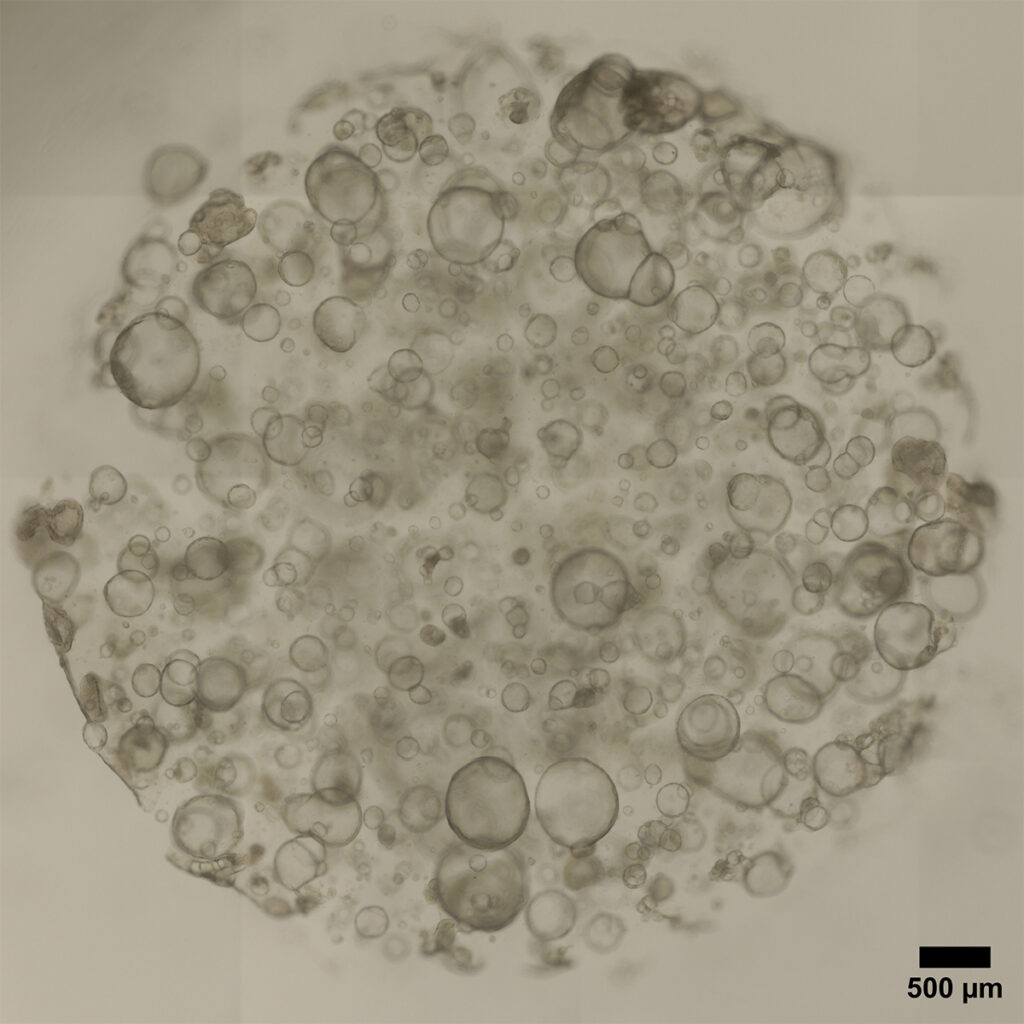
chicken lung organoid

Developing the first chicken lung organoids—artificially grown masses of cells that mimic the biological complexity of natural cells—from pathogen-free White Leghorn chickens, the research team has constructed a realistic lab environment that will later allow them to simulate viral transmission between members of a given species and from one species to another.

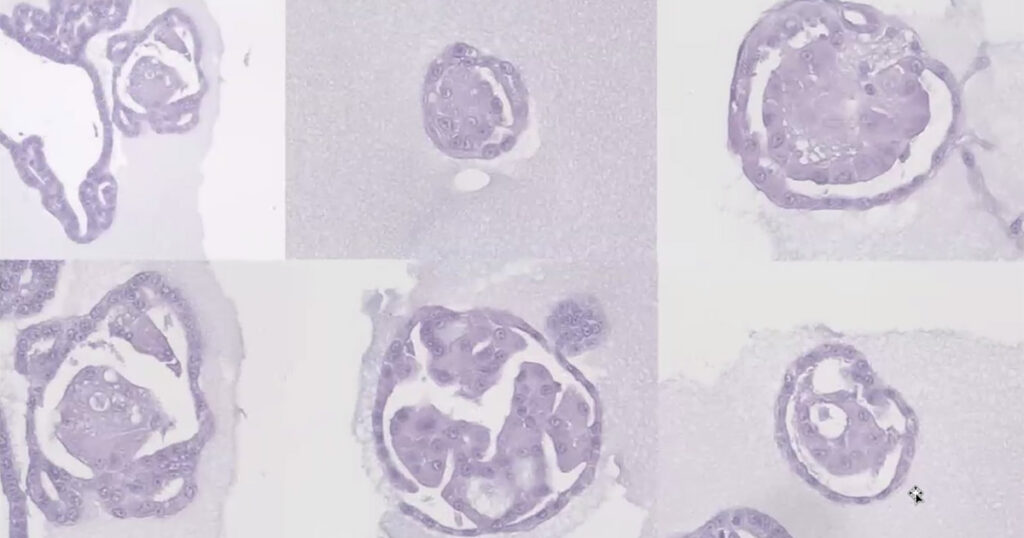
Using imaging techniques such as histology, immunostaining, and electron microsopy, the team confirmed that the organoids’ structural complexity and gene expression made them a relevant tool for studying how the virus interacts with lung tissue. This model provides a new way to explore viral behavior, disease mechanisms, and potential antiviral targets in a system that closely mimics the biology of the host. It is also ethically superior as it does not involve the use of live animals.

Chicken lung organoids

Building on these findings, the research team plans to co-culture airway organoids from various animal species with the H5N1 virus to explore key evolutionary pathways and host-virus interactions that drive viral adaptation and spillover. Identifying the molecular signatures that predict transmission will inform design of species-specific countermeasures intended to lessen or even prevent such transmission.

The goal of all this work is to develop targeted interventions, enhance surveillance strategies, and guide evidence-based policies to mitigate future outbreaks. Ultimately, the research also helps advance pandemic preparedness, safeguard global food security, and address zoonotic influenza’s escalating threat to human health.

The research team includes scientists from the UGA College of Veterinary Medicine (Mochel, Zdyrski, Nicholson, Allenspach, Sundaram), Iowa State University (Carnaccini) and the School of Medicine at Emory (Lowen, Lakdawala).

If you are interested in learning more about this work and how you might support it, contact Jon P. Mochel at jpmochel@uga.edu.
The Brave New [Artificial] World for the Study of Chronic Kidney Disease

Imagine a simulated environment in which biomedical researchers can study disease – its occurrence, development, and progression – as well as explore potential treatments to reverse or slow that disease.

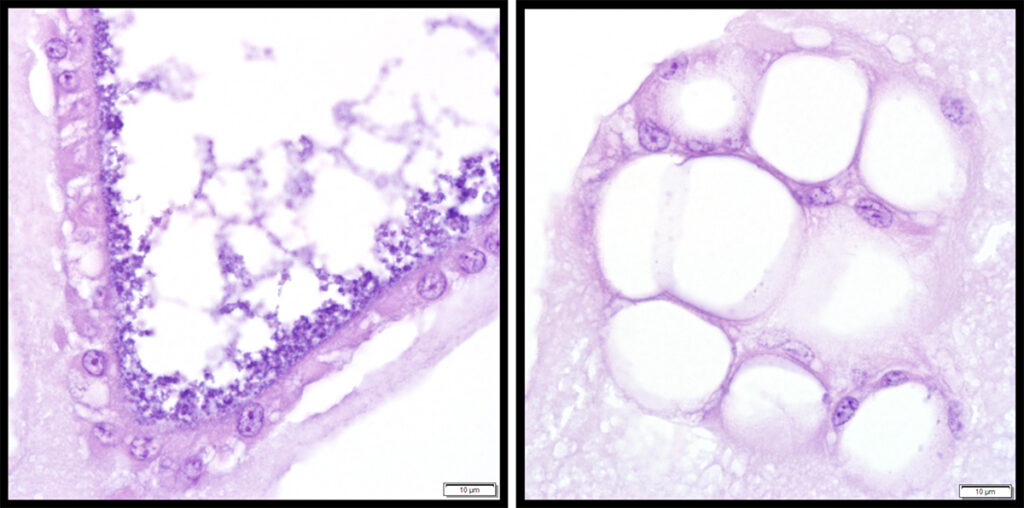
Canine kidney organoids
IMAGE: Christopher Zdyrski

Organoids, or artificially grown masses of cells that mimic the biological complexity of natural cells, are the foundation of this environment. To have a meaningful impact on health, organoids need to be an accurate representation of naturally occurring cells. UGA biomedical researchers working in One Health have made it their mission to create this accurate representation. Call it a biological moonshot.

These UGA researchers are starting a new research program that aims to produce accurate organoids of kidney cells for the study of chronic kidney disease (CKD) in humans, dogs, and cats.

“What you are seeing is one of the first images of 3D kidney epithelial cells that can be used to study CKD and investigate new treatments,” said Jonathan Mochel, director of the One Health program at the UGA Biomedical and Translational Science Institute.

CKD affects an estimated 35.5 million people in the United States alone. It is more common in older adults and animals, affecting some 34% of people aged 65 years or older, 35% of older cats, and 10 to 25% of older dogs. While there are methods to slow the progression, there is currently no cure nor any way to repair kidney damage resulting from the disease.

Kidney-Organoids

“The organoids we are producing can be used by research labs anywhere as they search for breakthroughs in the treatment of this disease,” said Mochel. “They can also inform the development of more targeted therapies for CKD.”

The research team includes collaborators from select academic institutions across the US and the EU, with support from Ceva Santé Animale. Funding will support graduate student Hannah Nicholson, who will develop her thesis based on this work. If you are interested in learning more about this work and how you might support it, contact Jon P. Mochel at jpmochel@uga.edu